Table of contents
Ever come home from a trip and realise you remember the queue more than the place? Overtourism has turned many once-mythic sights into logistical exercises, and in 2024 and 2025, destinations from Venice to Barcelona have tightened rules and debated caps as resident pressure grows. Against that backdrop, travellers are quietly shifting tactics, not by skipping travel, but by changing how they move through a country, choosing smaller valleys, slower rail lines, and family-run excursions where the day is shaped by landscape rather than crowds.
When the crowd shapes what you see
Nothing distorts a journey quite like a timetable dictated by congestion, and the phenomenon is no longer anecdotal. The UN World Tourism Organization (UNWTO) reported that international tourist arrivals reached 1.3 billion in 2023, or 88% of pre-pandemic levels, and the global rebound continued into 2024, with many hotspots receiving near-record flows again. This return has been uneven, concentrating demand in the same headline cities and heritage sites, and pushing travellers into the same narrow windows of “best time to go”, which in turn compresses footfall even further.
That pressure changes behaviour on both sides of the counter. Cities have moved to manage strain through fees, rules, and restrictions, and visitors respond by optimising, rushing, and pre-booking every hour. Venice approved the rollout of a day-tripper fee in 2024 on peak dates, Amsterdam has pursued policies to curb certain forms of mass tourism, and Barcelona has repeatedly signalled limits on short-term rental growth; each policy debate is local, but the pattern is global: too many people, at the same time, in the same places. The result is a kind of travel that looks efficient on paper and feels oddly thin in memory, because it is experienced through bottlenecks, screens, and the anxiety of missing a slot.
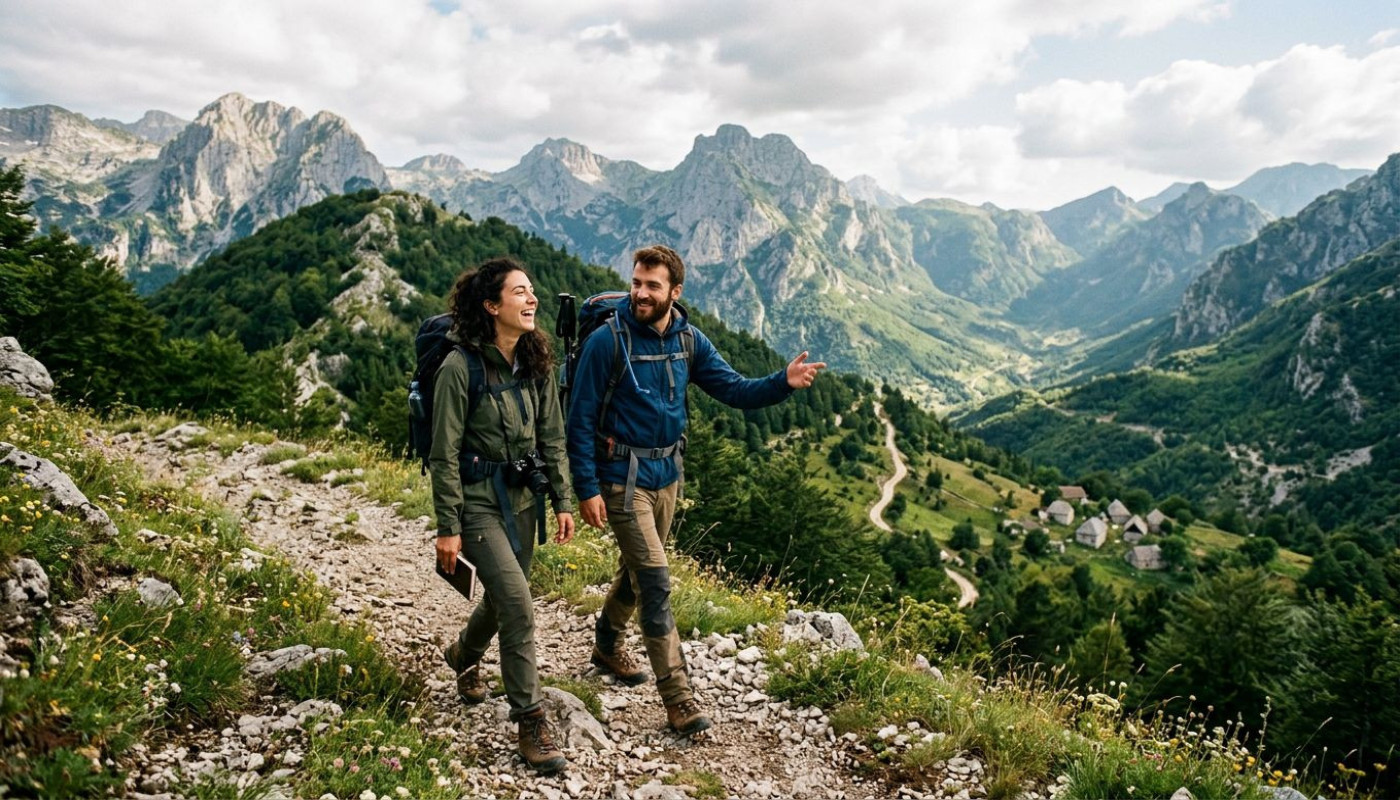
Off-the-beaten-path excursions shift that equation because they reintroduce unpredictability in a good way, and they reweight what matters. When you spend a morning on a trail where the loudest sound is wind through beech trees, or sit down in a village where lunch is paced by conversation rather than reservation times, you are no longer consuming a destination as a checklist, you are participating in it as a place with rhythms. This is not romanticism; it is the practical reality of human attention. Crowding narrows perception, while space widens it, and the difference can be felt in how much you notice, from dialects and local produce to small variations in architecture that never make it into the brochure shots.
The small detour that rewires attention
How do you know a trip is changing you? Often, it starts with a detour that forces you to slow down, and the brain, relieved of constant micro-decisions, begins to pick up detail again. Researchers in environmental psychology have long described “attention restoration”, the idea that natural environments can replenish the mental resources depleted by intense focus, and while travellers may not cite the theory, they recognise the sensation: fewer notifications, fewer crowds, more mental bandwidth. That is why a minor excursion, a river walk, a bike loop through farmland, a visit to a smaller museum with time to read the captions, can feel more nourishing than the marquee attraction wedged between two transit connections.
There is also a social effect that mainstream itineraries rarely deliver. In high-traffic zones, interactions are transactional and rehearsed; outside them, they become situational and specific. A guide has time to answer questions properly, a farmer can explain why the season has shifted, a host can recommend the next village without sounding like a sales script. The traveller’s role changes, too: instead of competing for the “best photo spot”, you become someone who listens, asks, and adapts. In practice, that is what perspective means: you stop judging a destination by whether it matched expectations, and you start understanding it on its own terms.
Detours can also correct a subtle bias built into travel culture. Algorithms amplify what is already popular, and itineraries converge, especially among first-time visitors who fear missing “the” landmark. Yet the most enduring travel memories are frequently tied to moments that were not planned, or were planned loosely enough to invite discovery: a local festival you did not know existed, a viewpoint no influencer has labelled, an evening where you eat what the kitchen feels like cooking. The point is not to avoid famous places out of principle, it is to rebalance the trip so that the famous is contextualised by the everyday, and the everyday is where you actually learn how a country works.
Local economies feel the difference too
Follow the money, and the case for lesser-known excursions becomes more than a mood. In many destinations, high-volume tourism funnels spending toward a small set of central districts, international chains, and a limited roster of “must-do” operators, while peripheral areas struggle to capture value despite hosting the landscapes and traditions that visitors claim to be seeking. When travellers spread out, even modestly, they diversify who benefits: independent guides, rural guesthouses, craft producers, small museums, regional transport services. The impact is not just economic; it can sustain skills and ways of life that are otherwise squeezed by seasonality and urban migration.
Evidence of the imbalance is visible in the way destinations market themselves. National and regional tourism boards increasingly push dispersal strategies, urging visitors to travel beyond capitals and to consider shoulder seasons, precisely because the concentration of demand creates fragility. A city centre can look prosperous while nearby communities see little uplift, and when residents feel that tourism is extractive, political backlash grows, leading to restrictions that can make travel more complicated for everyone. Off-the-beaten-path excursions do not solve overtourism alone, but they are one of the few levers individual travellers can pull immediately, without waiting for policy and without sacrificing quality.
They can also be a more sustainable use of time and infrastructure. Smaller-scale excursions often rely on existing trails, local rail or bus links, and shorter supply chains for food, and while sustainability varies by operator, dispersal can reduce pressure on overstretched sites and distribute visitor load across a wider geography. For travellers who care about impact, the practical question becomes: where does my spending go, how do I move, and am I adding to a choke point or easing it? In many regions, the answer is found in planning one or two days away from the centre, and letting those days set the tone for the rest of the trip.
How to plan beyond the obvious
Want the benefits without the hassle? The trick is to be intentional, not extreme. Start by choosing one anchor, a city or a well-known park, then build outward in rings: day trips first, then one overnight in a smaller town, then a transit route that doubles as scenery. Rail and regional buses can be part of the experience rather than dead time, and the best itineraries treat travel days as story days, not blank spaces between “real” activities. When you do this, you also regain flexibility, because you are not fighting for the same tickets as everyone else at the same hour.
Information quality matters, and it is often better from local sources than from generic listicles. Destination portals, regional park sites, and on-the-ground operators can reveal which trails are open, which valleys are accessible without a car, and which cultural events are actually happening, not just described as perennial. In Slovenia, for instance, travellers looking to broaden their itinerary beyond the postcard stops can use https://www.slovenia-spirit.com/ as a starting point to explore themes, regions, and practical ideas, then cross-check logistics with local transport and accommodation options. The goal is not to over-plan, it is to plan enough that the “detour” is smooth, and smoothness is what makes you willing to wander.
Budgeting is often easier than people expect. Lesser-known excursions can cost less than headline attractions, especially when they involve public transport, self-guided routes, or small-entry museums, and even guided experiences can be better value because groups are smaller and the day is longer, not because the marketing is louder. Keep a buffer for taxis in rural areas, pay attention to seasonal closures, and if you are travelling in shoulder season, verify opening hours in advance, because the quiet that makes these places appealing can also mean reduced schedules. Above all, leave white space, because the entire point of going beyond the obvious is to let the place surprise you.
A practical way to get started
Book one “big” highlight, then reserve one day for a smaller excursion, ideally reachable by rail or bus, and keep a modest contingency budget for local transport and weather changes. Check whether your destination offers regional passes or discounted museum cards, and look for shoulder-season deals that reduce both cost and crowding. If you need certainty, reserve accommodation early and keep activities flexible.
On the same subject

Why Some Journeys Change Your Mind: Hidden Impacts Of Unexpected Destinations
Breaking The Routine: Why Offbeat Destinations Change The Way We Travel
Why Off-season Travel Reveals The Soul Of Hidden Destinations

Maximizing Your Stay At A Three-Star Urban Hotel

unveiling the charm of hidden european villages the ultimate destinations for off-the-beaten-path explorers

Exploring The Benefits Of Seasonal And Off-Season Luxury Camping
